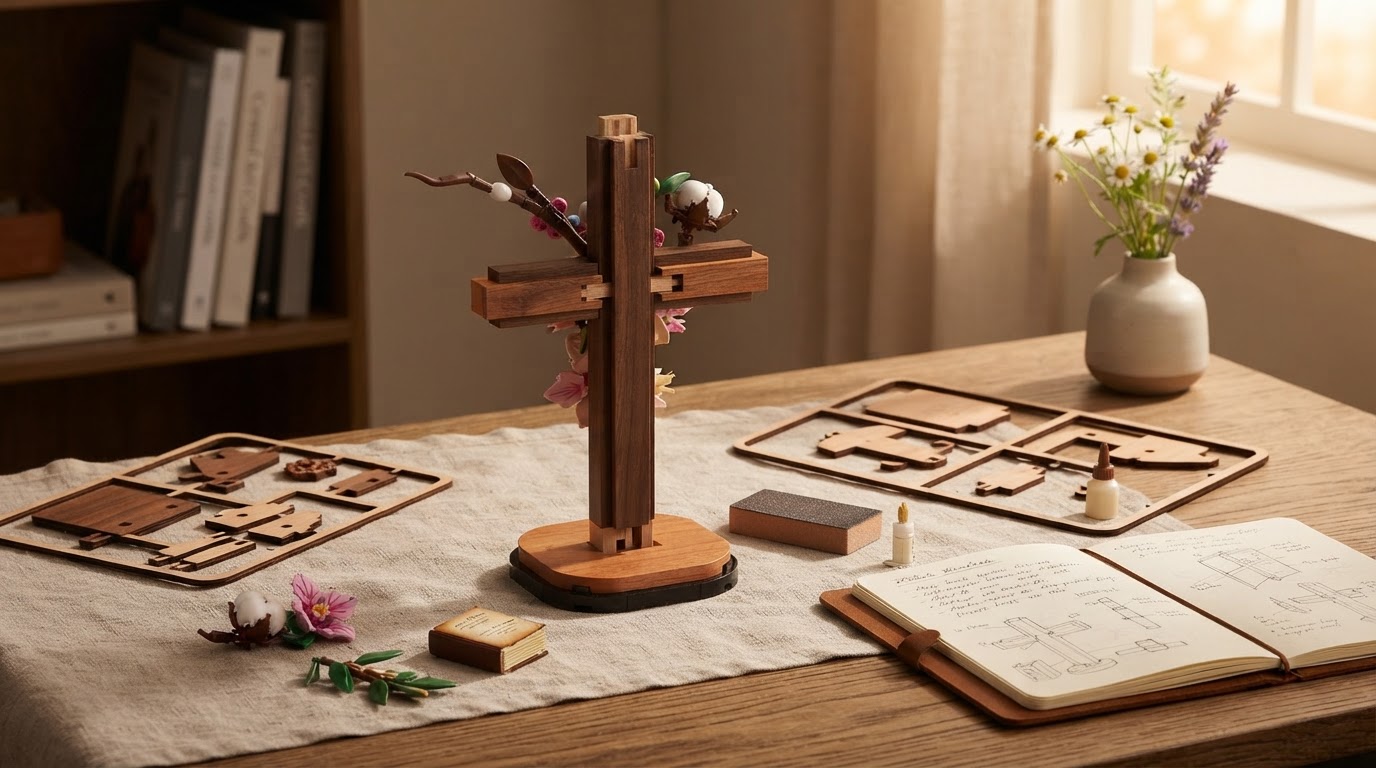
What defines a quality wooden cross model kit?
 Priya RamanSenior Analyst
September 26, 2026 — A high-quality wooden cross model kit is defined by its material density, the precision of its interlocking joinery, and its capacity to serve as both a meditative assembly process and a durable decorative object.
Selecting a kit requires navigating a market that ranges from simple flat-cut silhouettes to complex 3D structures. For consumers and hobbyists, the challenge lies in identifying which kits offer structural integrity versus those designed for temporary craft use. Understanding the technical specifications of these kits ensures the final product meets the aesthetic and longevity requirements of a modern home.
Think of it as a matrix of two primary axes: material complexity and assembly methodology. On one axis, we have material selection, ranging from basic plywood to premium hardwoods like walnut and maple. On the other axis, we have the assembly style, which moves from simple adhesive-based bonding to advanced interlocking friction-fit systems. Once you see it this way, evaluating a kit like the Cross Building Set becomes a matter of assessing where it sits on this quality spectrum.
What materials are used in a wooden cross model kit?
Material selection determines the kit’s tactile feedback and long-term durability. While many entry-level kits utilize unfinished wood for maximum customization, premium options leverage the natural grain and weight of solid hardwoods. According to Dennehey Design, high-end build kits often include up to 20 pieces of solid walnut, oak, and maple wood that are pre-cut and sanded to ensure a professional finish. These materials are chosen not just for their appearance, but for their structural stability during the gluing and curing process.
The decision rule for material choice is simple: if the kit is intended for permanent display, solid hardwoods are preferable due to their resistance to warping. In contrast, kits designed for educational or group activities often utilize lighter, unfinished woods. Build-a-Cross notes that unfinished wood crosses are frequently used as inexpensive DIY home decor, providing a blank canvas for paint or stain. The Cross Building Set ecosystem bridges these categories by offering structured components that maintain their form regardless of the chosen finish.
How does assembly complexity vary across kits?
Assembly complexity is governed by the number of components and the precision of the cuts, which dictates whether the user needs specialized tools. Some kits are designed as small replicas of quilt blocks, such as those from J Michelle Watts Designs, which measure 4" x 4" and feature unique layered designs. These require a high degree of spatial awareness to align the patterns correctly. The complexity increases with 3D models, where the alignment of the vertical and horizontal axes must be perfect to ensure the cross stands plumb.
Advanced kits move away from simple two-dimensional overlays toward true three-dimensional construction. Digital previews of these structures, such as the wooden-cross 3D models found on Sketchfab, allow builders to visualize the internal geometry before physical assembly begins. For those utilizing a cross building set, the assembly process is often modular, allowing for a more forgiving experience than traditional woodworking while still providing the satisfaction of a complex build. This modularity is a key feature of modern [christian building blocks](/blog/christian-building-blocks), which prioritize user-friendly interaction without sacrificing the symbolic weight of the finished piece.
Quick answers
Q: How many pieces are typically found in a professional wooden cross model kit? A: A professional-grade kit, such as the 9-inch layered cross from Dennehey Design, typically contains 20 precision-cut pieces of solid wood. This level of detail allows for a more intricate and sturdy final assembly compared to single-piece designs.
Q: Can wooden cross kits be used for outdoor display? A: Most standard kits are designed for indoor use unless specified as weather-treated. If using an unfinished cross from Build-a-Cross for outdoors, it must be sealed with a high-quality exterior varnish to prevent moisture damage and wood rot.
Q: What is the average size of a desktop wooden cross kit? A: Desktop kits generally fall within the 4-inch to 9-inch range. For example, J Michelle Watts Designs offers 4" x 4" cross kits that are designed to mimic small quilt blocks, making them ideal for compact display areas.
Q: Do these kits require specialized woodworking tools? A: Most modern kits, including the [diy wooden cross kit](/blog/diy-wooden-cross-kit), are designed for assembly with basic household supplies like wood glue. The precision sanding and cutting are performed by the manufacturer, removing the need for saws or heavy machinery.
Learn more about Cross Building Set at https://crossbuildingset.com.
Sources
- Wood Cross Kits - J Michelle Watts Designs
- Small Layered Cross Build Kits - Dennehey Design
- Wooden Cross, Unfinished Wood Crosses, Wall Hanging Craft ...